AI Beauty Product Video Ads: Lighting, Texture and Brand Accuracy
Create clear beauty product campaigns with controlled reflections, verified copy and exact label overlays.
By the ClipMotion team · · 2,798 words · 13 min read
A ClipMotion brand guide written with AI assistance. Worked examples are hypothetical and do not represent measured customer results.
AI Beauty Product Video Ads: Lighting, Texture and Brand Accuracy
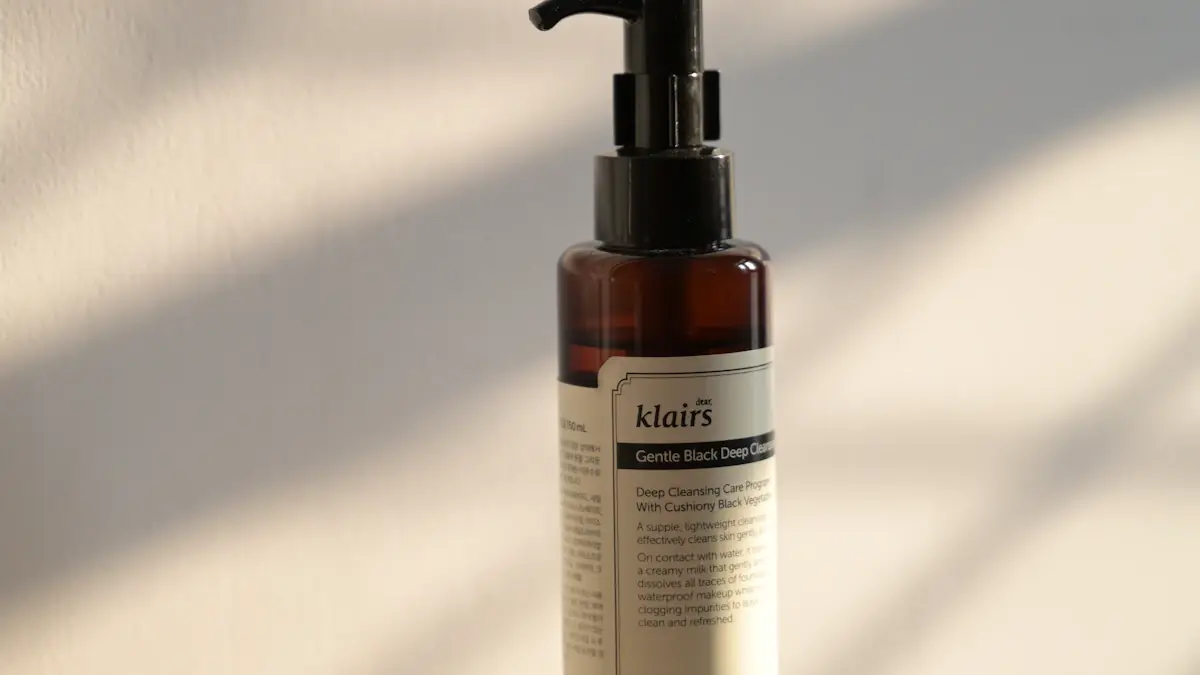
The amber glass fragrance bottle below is a hypothetical example, not a real brand's product. Confirm the packaging details and every ingredient or efficacy statement for the item you plan to advertise.
The most effective AI-generated beauty product videos emerge from deliberate control over physical properties that algorithms often misread: glass thickness, surface curvature, printed label scale, and the way light behaves at material boundaries. This guide treats the amber glass perfume bottle as a recurring case study—a challenging subject because its translucent walls, reflective shoulder, and often intricate cap geometry expose every weakness in automated rendering. Success requires separating what AI can reliably produce from what demands human direction, then building workflows that preserve brand integrity without endless regeneration cycles.
Understanding What AI Sees in Product Materials
AI video generators interpret product references through pattern recognition trained on millions of images. For an amber glass perfume bottle, the system identifies color temperature, opacity gradients, and highlight shapes it associates with "perfume" or "glass" categories. This becomes problematic when your specific bottle has unusual properties: a heavier base than standard, a faceted stopper rather than a smooth spray cap, or a label with metallic foil stamping that catches light differently than flat printing.
The amber glass itself introduces complexity. True amber glass contains iron and sulfur compounds that create selective light absorption—warmer tones transmit while cooler tones diminish. AI often renders this as simple orange transparency, losing the depth and edge-darkening that distinguishes quality packaging. When you upload reference images, the system may also conflate your bottle with training data from similar but distinct products, generating a generic silhouette rather than your precise form.
To counter this, supply multiple angles under consistent lighting. A single hero shot invites assumption; a set showing rim thickness, base curvature, and cap proportion from three-quarter views constrains interpretation. Note that some e-commerce platforms block automated product image import, requiring you to upload files directly—this extra step prevents degraded or watermarked references from entering the generation pipeline.
The Scene Workflow: Planning Before Generating
ClipMotion structures production through a scene workflow that plans individual shots before any visual generation begins. This sequencing discipline matters enormously for product work. Rather than requesting "a perfume bottle video" and hoping coherence emerges, you define specific moments: establishing shot on white, texture close-up of glass surface, cap detail with label legible, atmospheric pour or spray suggestion, final frame with logo and call-to-action.
For the amber glass bottle, a typical five-scene workflow might run: (1) full bottle on neutral surface, soft box lighting from camera-left; (2) macro-style shoulder detail showing glass thickness and amber color depth; (3) cap and spray mechanism from slightly above, label readable; (4) atmospheric moment with implied movement—perhaps a finger approaching the cap; (5) composed final with text overlay and purchase prompt.
Each scene receives its own reference selection and lighting brief. The workflow prevents the common failure mode where AI attempts to combine incompatible visual ideas—dramatic chiaroscuro with clinical white-background legibility—into a single muddled frame. It also creates natural review points. After scenes one through three generate, you evaluate whether the bottle's proportions hold before committing resources to atmospheric variations.
Lighting Briefs: From Clinical to Atmospheric
Lighting defines whether your product reads as premium or generic, trustworthy or evasive. Develop distinct briefs for different communication goals, never assuming one setup serves all purposes.
Clinical Brief: Even, shadow-minimizing illumination for ingredient claims and label verification. Two large soft sources at 45-degree angles, fill card below, background one to two stops brighter than subject minimum. For amber glass, this reveals true color without the dramatic edge glow that conceals imperfections. Use when introducing new products or displaying regulatory-required information.
Texture Brief: Raking or side-dominant light to emphasize material qualities. Single large source from camera-left at 15 degrees above horizon, minimal fill, dark surround. Amber glass shows its wall thickness, potential bubbles or striations, and the way light pools in thicker base sections. This brief risks label illegibility—accept the tradeoff or plan separate coverage.
Atmospheric Brief: Implied environment through color and direction. Warm tungsten-leaning key with cooler fill suggests evening intimacy; high contrast with defined shadow shapes implies editorial fashion context. The amber glass becomes a light source itself, glowing against darkness. Reserve for established products where recognition exists; avoid for first introductions where accurate identification matters.
Evidence Brief: Hybrid approach for efficacy claims. Product in clinical lighting, but with contextual element—skin swatch, ingredient raw material, before/after documentation—introduced under matching technical conditions. Prevents the credibility damage of obviously composited mismatched lighting.
Worked Example One: Launch Video for Niche Fragrance
Consider a hypothetical brand, "Sable Ouest," launching its first amber glass perfume. The bottle features a heavy rectangular base, short cylindrical neck, and a faceted crystal stopper. The label uses copper foil on cream stock. Marketing needs: establish luxury positioning, display full ingredient list legibly, suggest Mediterranean origin without explicit location claims.
Scene workflow construction:
Scene 1: Clinical full product. References uploaded: straight-on, three-quarter, top-down, base showing molded glass markings. Lighting brief specifies even 5500K illumination, f/8-equivalent depth of field, label readable at 1080p resolution. Generated output reviewed for stopper facet accuracy—early attempt rounded facets into generic dome, corrected by adding reference image of actual crystal cutting pattern.
Scene 2: Texture detail. Shoulder transition where glass thickens, showing amber color variation from edge to center. Raking light brief. Output initially blew out highlight on left facet; revised by asking for softer, less intense highlights, then reviewing the regenerated clip. A natural-language request cannot enforce a precise pixel brightness limit.
Scene 3: Cap and label. Tight framing with slight rotation suggesting hand-held examination. Clinical key with subtle warm fill. Ingredient list must resolve to readable text; acceptance criteria specifies 12-point equivalent minimum at final output resolution.
Scene 4: Atmospheric suggestion. Bottle on surface with implied sea salt residue—white crystalline texture, not explicit beach. Warm late-day lighting, shallow depth. No location text to avoid unverified origin claims.
Scene 5: Final composition. Logo, "Discover Sable Ouest," website. Remotion adds exact text elements; no regeneration needed if visual clip remains valid.
The ingredient list appeared only after regulatory verification. The "Mediterranean suggestion" used color and material association rather than geographical claim, preserving legal safety.
Glass Reflection Control: The Invisible Problem
Reflections on curved glass surfaces betray AI generation more readily than almost any other artifact. The system understands that glass reflects, but not what it should reflect in controlled studio conditions. You receive impossible room corners, light sources that don't match the stated setup, or generic gradient blobs that suggest environment without defining it.
For amber glass specifically, reflections carry color information. A white card reflector returns warm-tinted light through the glass body; a silver card returns cooler, more specular highlights. The AI may default to neutral gray reflections that deaden the amber quality.
Specify reflection content explicitly in your brief. "White card reflector visible as soft highlight on left bottle shoulder, no room details, no light stand reflections." For completely controlled reflections, request "black card flags eliminating all environment reflection, pure highlight from defined source only." This produces the clean, high-end cosmetic aesthetic associated with established houses.
When reflections must suggest environment—luxury bathroom, dressing table, natural setting—provide reference images of that specific environment from the angle the reflection would appear. The AI cannot reconstruct plausible spaces from description alone; it defaults to training data averages that feel institutional rather than particular.
Cap Shape and Label Legibility: Geometry Under Pressure
The transition from bottle body to cap creates acute rendering challenges. Threads, collars, spray mechanisms, and stoppers involve small mechanical details at the limits of AI resolution. A faceted stopper becomes smooth. A crimped spray collar becomes a simple cylinder. These errors matter because cap proportion significantly signals price point—heavy, complex closures imply investment; lightweight, simple ones suggest mass market.
For the amber glass bottle with crystal stopper, specify cap geometry separately from body. "Faceted stopper, 16 facets visible from primary angle, flat top surface, no dome." Reference images showing stopper from above, from side, and in hand establish scale relationships. Review generated output at actual display size, not thumbnail; facets often disappear at reduced preview resolution.
Label legibility operates under similar constraints. Small text, especially ingredient lists or efficacy percentages, requires generation at sufficient base resolution for subsequent sharpening. Frame the label prominently and test it at the intended display size. There is no single frame-width percentage that guarantees readable text. Test by attempting to read generated output yourself before approving; if you strain, your audience will fail.
Brand mark and logo positioning follow the same rules, with additional legal consideration. Trademark symbols, registration marks, and required disclaimers must appear exactly. Remotion handles final text overlay with precision; do not rely on AI generation for legally significant textual elements.
Verified Claims Only: The Evidence Threshold
Beauty advertising faces intensifying regulatory scrutiny. The Federal Trade Commission and equivalent bodies globally require substantiation for efficacy claims, and AI-generated video introduces unique evidentiary complications. A generated "before and after" sequence, even based on genuine study data, may constitute deceptive representation if the visual transformation exceeds actual results.
Establish internal verification gates. Any claim appearing in video—"reduces fine lines," "clinically proven," "dermatologist recommended"—requires documented evidence before script approval. The AI cannot verify claims; it renders whatever text you provide. The liability attaches to brand, not tool.
For the amber glass perfume, claims might include: "eau de parfum concentration" (verifiable against formulation records), "48-hour longevity on fabric" (requires testing documentation), "sustainably sourced ambergris alternative" (needs supply chain certification). Each demands evidence file before scene generation begins.
Visual suggestion of unverified claims proves equally dangerous. A generated image of visibly transformed skin alongside product implies efficacy without stating it. Review for implied claims: does the lighting suggest medical authority? Does the setting imply professional endorsement? Remove or verify.
Worked Example Two: Seasonal Campaign Refresh
Hypothetical established brand "Maison Vérac" refreshes its amber glass flagship for holiday. Existing product video from spring campaign remains visually valid—bottle unchanged, lighting brief reproducible. New requirement: limited edition gift packaging, seasonal atmosphere, urgency messaging without inventory deception.
Assessment of prior clips: spring scenes one through three (product, texture, cap) remain valid with unchanged reference. Scene four (atmospheric) requires evaluation—spring used morning light, green botanical suggestion; holiday needs evening warmth, gifting context. Scene five (final composition) definitely changes—new messaging, new CTA.
Workflow using ClipMotion: reopen the saved spring project and review which visual clips still represent the current product. Plan the new campaign around those that remain valid. Generate new scene four with holiday brief: "warm tungsten key, gift box surface texture visible, ribbon suggestion without specific holiday symbols." Generate new scene five. Remotion overlays "Limited Season" and "Find at Select Retailers"—no inventory claim, no false urgency.
Critical decision: spring's scene four showed product among white flowers. Holiday version initially generated with red berries—botanical accuracy risk, potential toxicity suggestion near fragrance. Replaced with neutral silk ribbon texture, verified non-problematic.
The unchanged scenes saved generation time and preserved visual consistency. The changed references (gift context, seasonal lighting) triggered necessary new generation rather than forced reuse.
When Authentic Photography Remains Essential
AI video generation excels at controlled studio product work but fails at certain authenticity requirements. Understand these boundaries to avoid damaging brand credibility.
Authentic photographs, screen recordings, or footage become preferable when: documenting actual human results (skin transformation, wear tests); showing real locations or events (factory tours, ingredient sourcing); capturing genuine user interaction (hand size relative to product, actual spray pattern); or establishing temporal specificity (limited edition with date-stamped elements).
For the amber glass perfume, consider these applications. The bottle itself generates beautifully in AI. A hand removing the stopper—if hand model diversity and exact scale matter—may need photography. The actual spray dispersion pattern, governed by mechanical orifice design, should be photographed to avoid implying finer mist than product delivers. Customer testimonials, if used, require actual recorded voices or verified written statements with likeness rights; never generate synthetic "reviewers."
Screen recordings serve tutorial content: how to open, how to apply, how to store. These practical demonstrations build trust through transparency that polished AI cannot replicate.
Acceptance Criteria and Review Protocol
Establish explicit standards before generation begins, not after disappointment. For each scene in your workflow, define:
Product fidelity: Specific elements that must match reference—proportion, color, surface texture, mechanical detail. "Amber glass color appears consistent with the approved reference in the intended viewing context." "Stopper facet count and orientation exact."
Text legibility: Minimum readable size, contrast ratio, rendering sharpness. "Added label text is legible against its background on the target display." "Ingredient list readable at 100% display scale."
Lighting coherence: Source direction consistency across scenes, highlight and shadow logic, color temperature relationships. "Key light always camera-left, warm fill always camera-right, no impossible reflections."
Claim accuracy: Every stated or implied claim mapped to evidence file. "No visual suggestion of unverified efficacy."
Atmospheric appropriateness: Brand alignment of mood, setting, association. "Luxury without ostentation, sensuality without explicitness."
Review at full resolution, at intended display size, and on target devices. Mobile compression affects amber glass particularly, crushing subtle color variation into flat orange. Test accordingly.
Specific Mistakes and Their Fixes
Mistake: Accepting first generation of bottle on white when amber glass reads as painted plastic. Fix: Add reference showing light transmission through base, specify "subsurface scattering visible in thicker glass sections," regenerate with texture brief.
Mistake: Cap renders as separate object with wrong scale, appearing to float or sink into neck. Fix: Provide reference showing actual cap-neck junction, specify "mechanical connection visible, no gap or overlap."
Mistake: Label text generates as convincing gibberish—letterforms without actual words. Fix: Never rely on AI for text; use Remotion for exact overlay, or ensure label occupies sufficient frame percentage and specify "placeholder text only, final added in composition."
Mistake: Atmospheric scene implies unverified ingredient origin through landscape suggestion. Fix: Remove specific geography, use abstracted color and texture, verify with legal if any natural association remains.
Mistake: Regenerating entire project for minor text change. Fix: Confirm visual clip remains valid; edit overlay copy in Remotion without touching approved scenes.
Mistake: Changed product reference (new cap design) without reviewing prior clip validity. Fix: Systematically check each existing scene against new reference; mark invalid scenes for regeneration while preserving valid work.
Final Checklist
- Product references uploaded from multiple angles, direct upload used if platform import blocked
- Scene workflow planned with specific purpose per shot
- Lighting brief selected: clinical, texture, atmospheric, or evidence
- Cap geometry and label legibility specified and reviewed
- All claims verified against evidence files
- Reflection content explicitly controlled
- Authentic photography identified where AI insufficient
- Acceptance criteria defined pre-generation
- Full-resolution review completed on target devices
- Text overlay handled in Remotion, not AI generation
- Project saved, valid clips preserved through changes
Frequently Asked Questions
How many reference images should I upload for reliable amber glass rendering?
Choose references that show the details your planned scenes need: a straight-on view, shoulder thickness, cap geometry, and any relevant base markings. More images are not a guarantee of better output; consistency and relevance matter. If your product exists in multiple sizes, include scale reference—a hand, a coin, a standard measure.
Can I reuse last year's video scenes if only my marketing message changed?
Yes, if the product reference remains identical and your visual context requirements haven't shifted. ClipMotion saves projects, allowing scene-by-scene validity assessment. A new seasonal promotion requiring only text and CTA changes needs only Remotion overlay updates. However, any reference change—reformulated product, new packaging, updated cap design—requires checking whether prior clips still represent accurately. When in doubt, regenerate.
Why does my generated bottle look premium in still preview but cheap in motion?
Motion reveals temporal inconsistencies AI struggles to maintain: highlight positions that drift illogically, reflections that contradict camera movement, glass thickness that appears to vary. Specify "locked lighting rig, camera movement only" rather than allowing implied light source movement. Review motion specifically for reflection coherence—this failure mode separates convincing product work from obvious generation.
When must I use authentic photography instead of AI generation for beauty products?
Three clear triggers: human results documentation (skin, hair, wear tests), mechanical function demonstration (actual spray pattern, pump action, texture upon application), and temporal or legal specificity (date-stamped limited editions, regulatory submission documentation, evidence preservation). AI excels at controlled studio product presentation; photography retains essential roles in verification and function. A generated amber glass bottle still requires fidelity review; the experience of wearing the fragrance, captured in actual skin interaction, demands authentic recording.
This guide reflects verified capabilities and established practices for AI beauty product video production. For brands ready to implement controlled scene workflows with precise lighting direction and claim verification, ClipMotion provides the structured generation and composition tools described. Begin a project with your product references and defined messaging to test these methods against your specific packaging challenges.